Home & Studio Guide: How to Choose a Power Rack (2026)

Choosing the right power rack is one of the most critical decisions when setting up a high-performance strength training space. It isn’t just about structural strength ratings or brand names; the right rack should fit your physical space, adapt seamlessly to your training mechanics, and grow with your lifting journey over time. Below are the definitive key factors to consider when selecting a commercial-grade power rack for home gyms, personal training studios, schools, or commercial use.
Key Factors to Consider When Choosing a Power Rack
1. Available Training Space & Clearance
Before looking at advanced features, measure your available floor footprint and ceiling height with precision. Power racks vary significantly in total footprint and height, and you will need enough working clearance for overhead barbell lifts, wide-grip pull-ups, and dynamic attachment use. A premium power rack that fits your space comfortably will always be safer and more usable than a massive rig that leaves your lifting environment feeling cramped.
2. Rack Compatibility and Modular Expandability
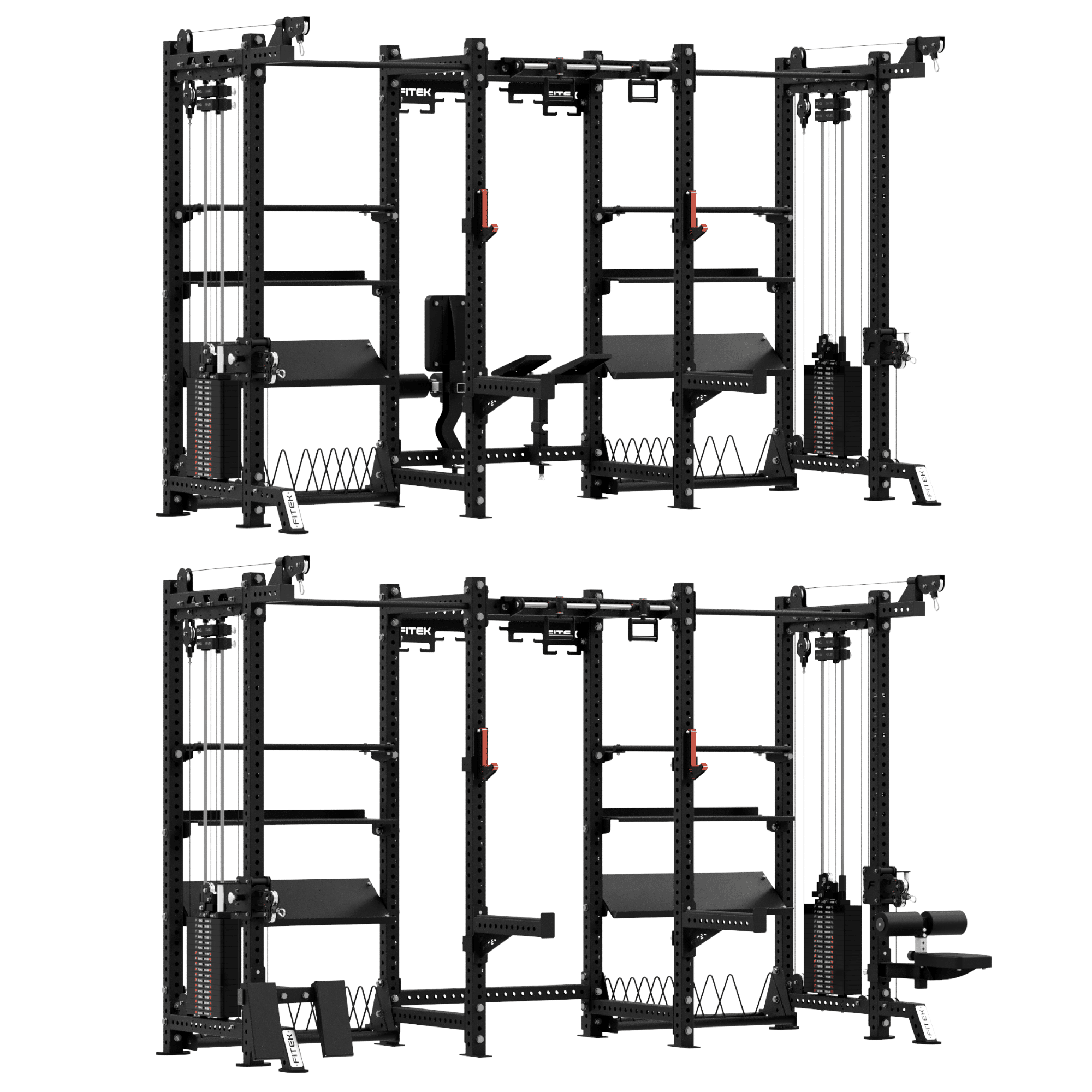
Modern strength training systems are increasingly modular. A power rack that supports structural expansion over time does far more than simply hold a loaded barbell—it evolves alongside your training goals, space constraints, and facility needs. This long-term modular philosophy is exactly why the FITEK Commercial Heavy Duty Power Rack has become the gold standard across Australian training facilities.
When selecting a core rack framework, it is vital to check whether the uprights natively support a wide range of commonly used high-impact attachments, such as:
- Chest-Supported Row Systems: Isolate your upper back safely using specialized rack-mounted pads like the premium FITEK Bridge Pad Attachment.
- Lower-Body Mobility Accessories: Build explosive lower-body strength for movements like Bulgarian split squats, lunges, and hip-dominant variations using heavy-duty FITEK Leg Rollers and core-shredding FITEK Landmine Attachments.
- Upper-Body Performance Tools: Integrate stable FITEK Dip Bars and multi-grip FITEK Utility Rack Handles.
True expandability also goes beyond raw training movements; it cleans up your facility layout. High-end racks can be seamlessly configured to include heavy-duty integrated storage solutions to eliminate floor clutter instantly:
- Organize your free weights cleanly with commercial-grade Dumbbell Storage Boards and rugged Kettlebell Storage Boards.
- Keep bumper weights within arm’s reach with heavy-gauge Bumper Plates Toasters and industrial Medicine Ball Storage Shelves.
For lifters wanting the ultimate all-in-one setup, some elite power racks can be upgraded with an ultra-smooth FITEK Cable Pulley Unit Add-on for exercises like heavy lat pulldowns, low rows, and face pulls. Furthermore, you can even integrate a specialized FITEK Smith Machine Extension Attachment, expanding your rack into a guided bar path gym machine without increasing its original compact footprint.
Build Your Ultimate All-In-One Power Rack Setup
Why buy multiple separate gym machines when you can consolidate everything into one elite station? Turn your FITEK Power Rack into a commercial-grade Cable Machine, Smith Machine, and Weight Storage system simultaneously.
3. Structural Stability and Heavy Load Capacity
A professional power rack must feel rock-solid under immense mechanical load. Look for thick steel walls, consistent laser-cut hole spacing, and secure bolting options. Stability becomes non-negotiable when training heavy near your max-effort personal records, or when hosting multiple athletes rotating through high-velocity training sessions.
4. Hole Spacing, Sizing & Upright Markings
Hole layout plays an overlooked role in how adaptable a power cage truly is. Premium racks utilizing a 4-way hole design on both the vertical uprights and base crossbeams allow attachments to be mounted from multiple directions, making it effortless to configure your workout space.
Power rack uprights featuring 21mm diameter holes spaced at uniform 50mm intervals support a massive catalog of rack-mounted attachments while allowing precision height micro-adjustments for bench press and squat setups. This optimal sizing perfectly pairs with robust 20mm attachment pins, which strike the perfect balance between extreme load capacity and user-friendly manipulation without feeling overly bulky. Laser-engraved numbered markings along the uprights further minimize guesswork when repeating bar positions between sets.
5. Training Goals and Real Use Case
Rather than focusing on arbitrary “home” or “commercial” labels, evaluate the raw build quality and suitability for your daily training intensity. Whether a rack is deployed in a commercial CrossFit box, a school performance center, or a backyard garage gym, it demands the same tier of absolute safety, structural stability, and reliable long-term functionality.
Why Customizability Matters When Choosing a Power Rack
Training spaces vary wildly in layout, floor layout, and purpose. A customizable modular rack system allows users to construct a tailored setup that fits their room, rather than forcing their valuable space to conform to a rigid, unchangeable frame. For home gyms, this flexibility is the difference between an open, highly functional setup and a cluttered room.
If your training facility ever relocates or expands due to renovation, a modular system allows you to retain your original heavy-duty investment and scale up gradually by adding components like extra uprights, storage trees, or specialized pulley networks like the integrated FITEK Compact Dual Pulley Rack System.
Frequently Asked Questions
How much room clearance do I need for an Australian home gym power rack?
While it depends on the framework height, ensure you have at least 30-50cm of clearance above the rack for dynamic pull-ups, and enough side room to easily slide loaded 450mm standard Olympic weight plates onto your barbell sleeves.
Are modular power racks completely safe for solo strength training?
Yes, absolutely. One of the single greatest structural advantages of investing in a heavy-duty power rack is the built-in safety net. Utilizing adjustable steel safety arms, spotter pins, or heavy-duty nylon straps allows you to push your heavy lifting sets to failure alone safely.
Do all power rack brands support the same attachments?
No. Attachment compatibility is determined strictly by the upright steel dimensions (e.g., 75mm x 75mm), hole diameters (e.g., 21mm), and hole spacing. Always verify these precise engineering dimensions before purchasing accessories for your lifting cage.
Final Thoughts
Choosing the perfect power rack isn’t about finding the most expensive piece of equipment; it’s about investing in a modular, commercial-grade anchor system that completely adapts to your current training style, protects your safety during solo lifts, and expands effortlessly as your strength performance progresses over the years.