
Why an Adjustable Bench Matters More Than You Think in Strength Training

An adjustable bench is more than just a piece of hardware; it plays a critical role in strength training quality and performance. In strength training, small details often have a big impact. While racks, barbells, and plates tend to get most of the attention, the adjustable bench is one of the few pieces of equipment that directly affects how your body is supported during a lift. The way a bench feels, adjusts, and stabilises under load can influence not only performance, but also comfort, confidence, and long-term joint health.
An adjustable bench isn’t just about adding incline options, it plays a key role in how effectively you press, row, and support your body across a wide range of movements.
The Adjustable Bench as a Contact Point
Unlike a rack, which acts as a structure around you, a bench is a primary contact point. Your upper back, hips, shoulders, and sometimes your head remain in contact with it throughout a lift. Because of this, bench design has a direct influence on posture, stability, and force transfer.
A poorly designed bench can encourage excessive arching, shoulder discomfort, or instability under load. A well-designed adjustable bench, on the other hand, helps you stay braced, maintain consistent positioning, and focus on the movement itself rather than fighting the equipment.
How Adjustability Affects Training Quality
Adjustability isn’t just about having more positions, it’s about having useful positions that support real training.
Benches that move smoothly between flat, incline, and upright positions allow lifters to:
- Maintain consistent pressing mechanics across angles
- Transition efficiently between exercises
- Support upper-body movements without unnecessary setup changes
Clear angle markings or numbered adjustment points also help repeat setups session to session, which becomes increasingly important as loads increase or when multiple people share the same bench.
Comfort Isn’t a Luxury – It’s Functional
Bench padding is often overlooked, yet it plays a major role in training quality. Padding that is too soft can compress unevenly under load, reducing stability. Padding that is too firm can create pressure points, particularly along the spine and upper back.
A well-balanced bench pad provides:
- Firm support for heavy pressing
- Enough cushioning for longer training sessions
- Minimal gap between seat and back pad to allow natural positioning
Comfort, in this context, directly supports better execution and consistency rather than simply “feeling nice.”

Stability Under Load
When pressing heavy, even small amounts of bench movement can be distracting or unsafe. Bench stability depends on frame design, construction quality, and how weight is distributed through the base.
Solid steel construction, secure welds, and non-slip feet all contribute to a bench that stays planted under load. This becomes particularly important in shared or high-use environments, where equipment is used repeatedly throughout the day by different lifters.
Movement and Space Efficiency
In many training spaces, the bench needs to move as often as it’s used. Features such as integrated wheels, well-placed handles, or the ability to store upright can make a noticeable difference in day-to-day usability.
A bench that’s easy to reposition encourages better space management, especially in home gyms or multi-purpose training areas where equipment is regularly rearranged.
A Practical Example of an Adjustable Bench in Use
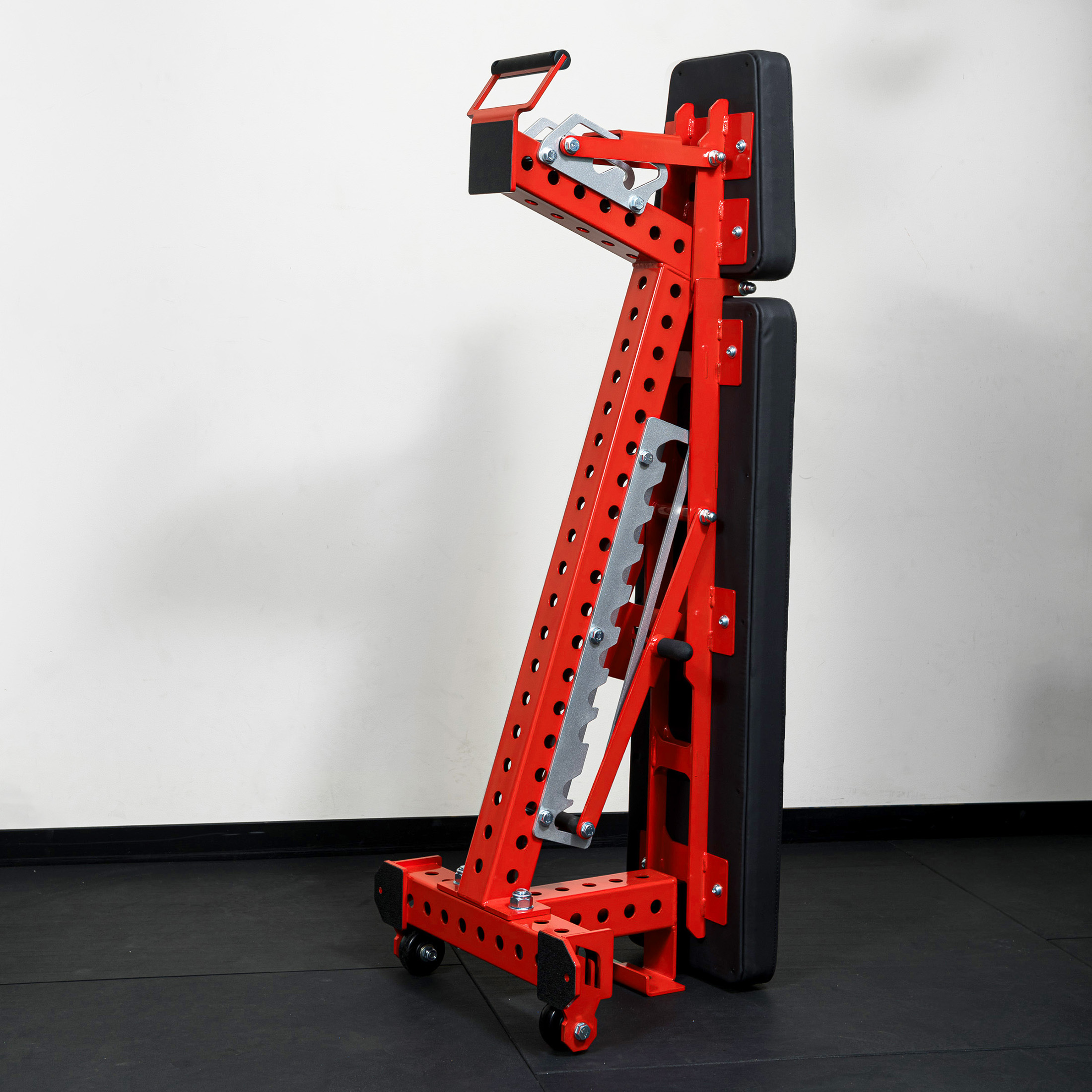
One example of how these principles come together is the FITEK Elite Adjustable Bench 3.0. Designed with multiple backrest positions and supportive seat angles, it allows lifters to move between flat, incline, and upright work while maintaining consistent body support.
Versatility also plays a role in how the bench is built. The steel frame includes a unique 4-way hole design that allows other equipment to be attached, opening up more training options beyond traditional bench work. It’s a small design choice, but one that adds flexibility over time as training needs change.
Storage is another area where thoughtful design shows up. Instead of taking up floor space when not in use, the bench can be stored vertically using its built-in stand. The curved edge makes it easy to roll and reposition, even while upright, which is especially useful in garages, studios, or busy gym floors where space is always at a premium.
Taken together, these details highlight an important point: a well-designed adjustable bench isn’t just about how many settings it has. It’s about how well it supports the lifter, how easily it fits into the training space, and how seamlessly it adapts to everyday use.
Upgrade Your Pressing Foundation
Stop compromising your lifts with an unstable bench. Discover the heavy-duty FITEK Elite Adjustable Bench 3.0, engineered for commercial stability, vertical storage, and unmatched comfort.
If you’d like to see these ideas in action, we’ve put together a short video that walks through real bench setups across flat, incline, and upright positions.
Understanding Common Bench Types
Not all benches serve the same purpose:
- Flat benches are simple and effective for basic pressing but limited in versatility.
- Adjustable benches support a wider range of movements and training styles.
- Folding benches prioritise storage but may compromise stability.
- Commercial-grade benches are built for frequent use and higher loads.
The right choice depends less on labels and more on how the bench supports your training habits.
Frequently Asked Questions
Do I need a decline option on an adjustable bench?
For most lifters, flat and incline positions cover the majority of training needs. Decline positions are used less frequently and aren’t essential for general strength training.
Can an adjustable bench be used inside a power rack?
Yes. A well-sized adjustable bench can be used inside a rack for pressing and supported movements, helping keep training setups compact and efficient.
Is there really a difference between home and commercial benches?
Rather than categories, the real distinction is build quality. A bench designed to handle consistent load and repeated use can perform well in both home and shared environments.
Wrapping Up
An adjustable bench may look simple, but its role in strength training is significant. As one of the main points of contact between lifter and equipment, it influences how movements feel, how loads are controlled, and how consistently you can train over time.
When chosen thoughtfully, an adjustable bench becomes more than an accessory, it becomes a foundation for better movement and long-term progress.