
Best Rack Attachment for Chest-Supported Rows
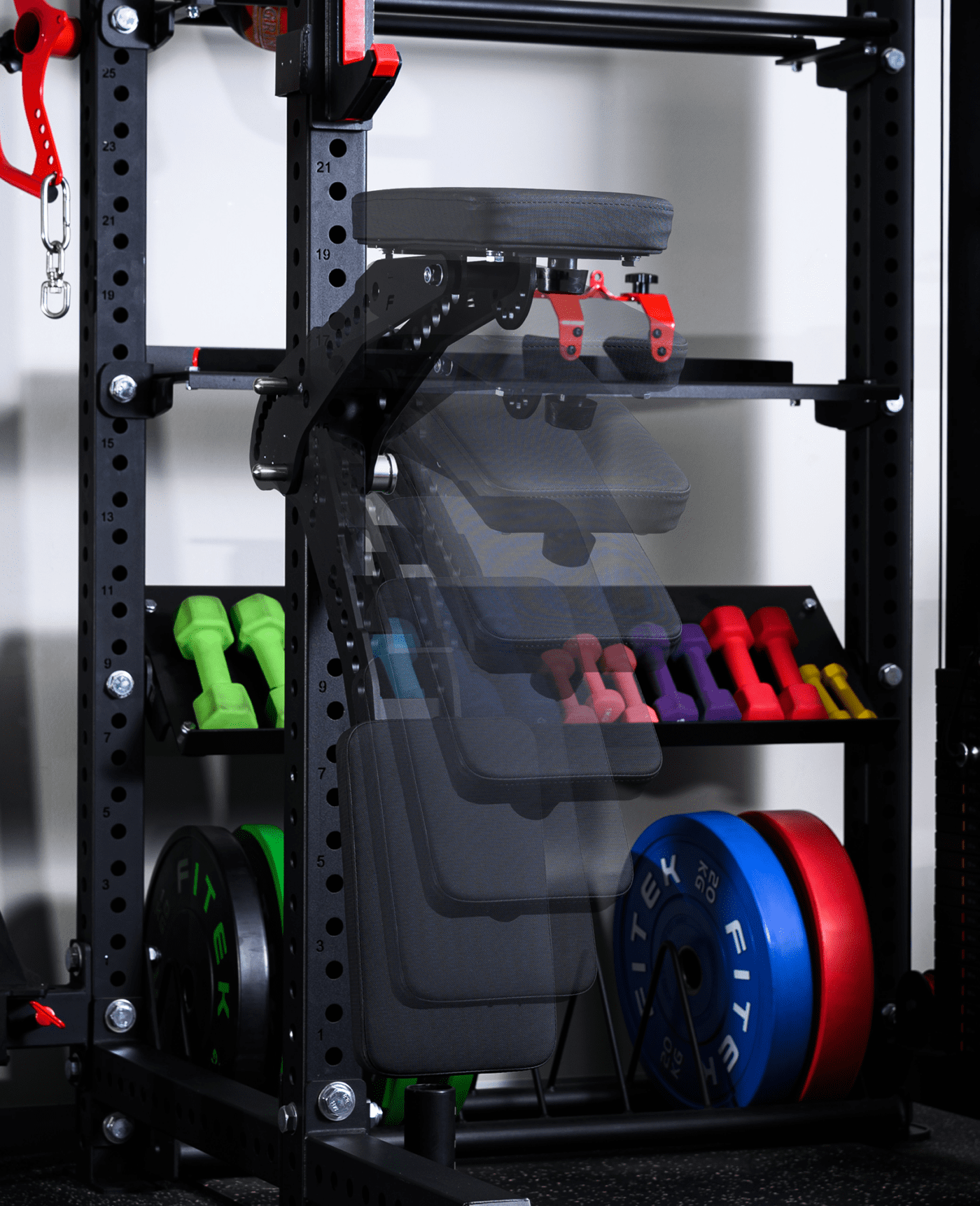
When people search for the best rack attachment for chest-supported rows, they are usually looking for stability, adjustability, and compatibility with a range of training movements. This guide compares common rack-mounted solutions and explains what features matter most for effective strength training.
If you want to see how these modular rack attachments are used in real commercial training environments, the premium FITEK Bridge Pad is the perfect reference for an advanced adjustable rack solution.
Popular Chest-Supported Row Attachments Compared
When searching for the best rack attachment for chest-supported rows, some popular options often come up. All are well-built, rack-mounted solutions designed specifically for chest-supported rowing movements in strength and performance gyms. However, many athletes and coaches are now looking for more versatile alternatives that go beyond a single movement. That’s why adjustable, rack-mounted pad systems are popular—they can support rows and other movements too, without taking up extra floor space.
| Feature | FITEK Bridge Pad | Other-Style Chest Pad |
|---|---|---|
| Pad design | Adjustable padded support | Single fixed chest pad |
| Pad angle adjustment | ✅ 7 adjustable pad angles | ⚠️ Limited or fixed angles |
| Support arm adjustment | ✅ Up to 8 adjustable positions | ❌ Fixed or minimal adjustment |
| Chest-supported rows | ✅ Yes | ✅ Yes |
| Back-supported chest presses | ✅ Yes | ❌ Not intended |
| Hip thrust compatibility | ✅ Yes | ⚠️ Limited / not designed |
| Exercise versatility | ✅ Rows, presses, flys, hip thrusts | ⚠️ Primarily rows |
| Rack compatibility & pin size | Fits 75×75mm racks (multiple pin options) | Brand-specific rack standards |
| Setup flexibility | ✅ High — multiple adjustment points | ⚠️ Limited |
| Gym space efficiency | ✅ One attachment, multiple uses | ⚠️ Single-purpose attachment |
Key Factors to Consider When Choosing a Rack Attachment
When choosing the best rack attachment for chest-supported rows, there are five key factors that directly affect comfort, safety, and training versatility: adjustability, rack compatibility, stability, exercise range, and space efficiency.
1. Adjustability and Positioning
Adjustable pad angles and multiple positioning options allow athletes to fine-tune torso support, range of motion, and muscle engagement. Greater adjustability helps accommodate different body sizes and makes the attachment usable across more exercises.
2. Rack Compatibility and Pin Size
Most premium rack attachments are designed for 75 × 75 mm power racks, but pin size and hole spacing can vary. Attachments that offer different pin size options (16mm, 20mm, 24mm) are more likely to fit securely across a wider range of rack systems.
3. Stability Under Load
A well-designed rack attachment should remain rock-solid during heavy rows. Secure mounting points and locking index plungers help prevent unwanted movement and improve confidence when training under max effort loads.
4. Exercise Versatility
Some rack attachments are designed only for chest-supported rows, while others can be adjusted for additional movements such as back-supported incline presses, chest flys, or heavy hip thrusts. Greater versatility allows one attachment to act as a multi-gym tool without cluttering the floor.
5. Space Efficiency and Setup Speed
Rack-mounted attachments that install quickly and don’t take up floor space help keep training areas organised. Faster setup and adjustment are especially valuable in busy commercial gyms or space-limited home setups.
Frequently Asked Questions
What is a chest-supported row attachment?
A chest-supported row attachment is a power rack accessory that stabilises your torso during rowing movements. This lets you train the upper back with extreme intensity without taxing the lower back, making rows safer and more isolated for muscles like the lats and rhomboids.
How does an adjustable pad differ from a fixed chest pad?
Fixed pads are set in one position. Adjustable pads allow you to change angles and positions, helping you tailor movement mechanics to your body size and exercise variation. This increases comfort and massively expands usable exercises.
Can rack attachments be used for more than rows?
Yes, depending on the design. Some attachments support back-supported presses, flys, and hip thrusts when adjusted properly. Others are focused mainly on rows. Your choice should match how you plan to scale your training.
Do these attachments fit all power racks?
Most are designed to fit standard 75×75mm upright racks, but pin size and hole spacing vary by brand and model. Always check compatibility (e.g., 16mm/20mm/24mm pin sizes) before purchase.
Adjustable. Stable. Built to Perform.
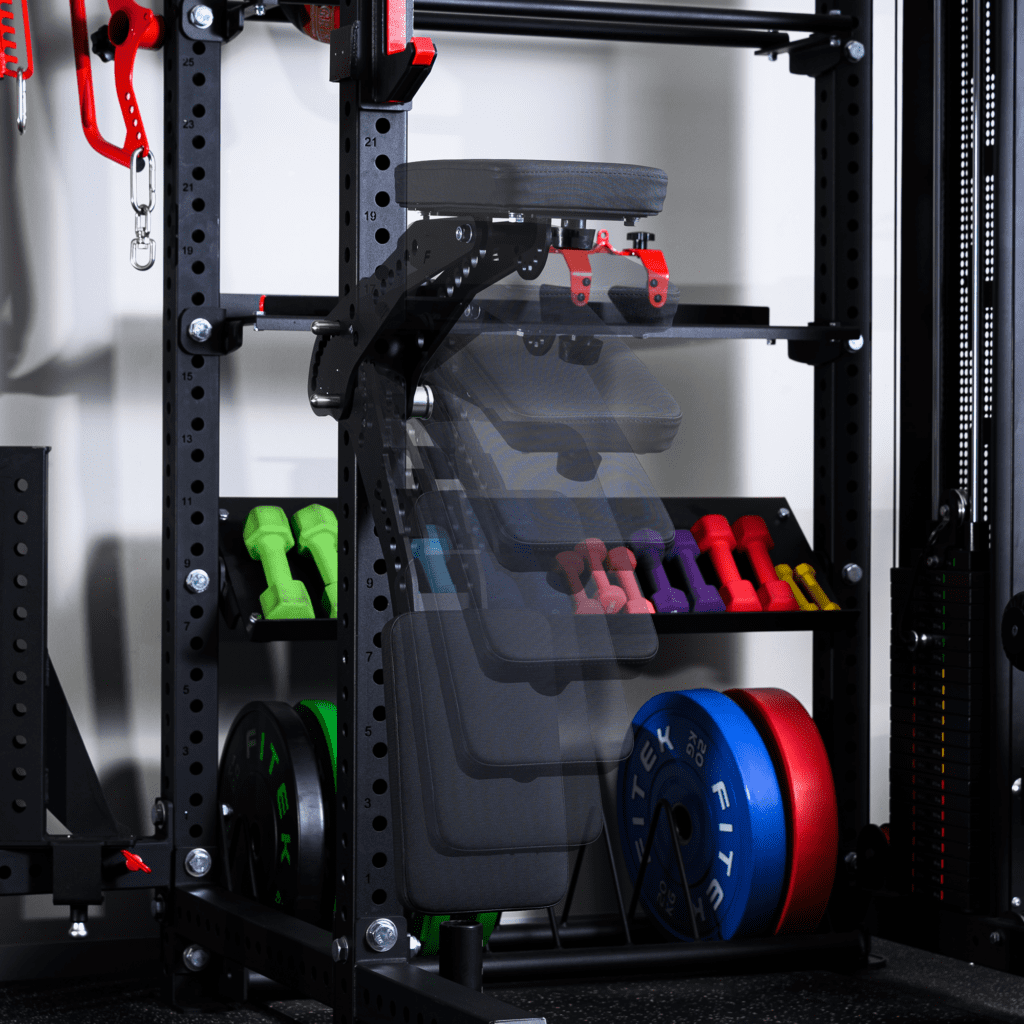
The FITEK Bridge Pad features two independently adjustable sections, allowing precise positioning to suit different exercises, body types, and training goals. The front pad offers multiple angle settings so you can fine-tune posture, range of motion, and muscle engagement with absolute confidence.
- Locking index plungers for a rock-solid and secure position
- Free spin option for smooth and natural hip bridges and thrusts
- Integrated carry handle for fast and easy installation
- Protective plastic pads to prevent metal scratches on your rack
Every detail is designed for real-world gym use. Stable under load, quick to adjust, and comfortable for athletes at every level.
Designed to Fit Your Rack
To suit almost any commercial 75 × 75 mm power rack, the Bridge Pad is available in three precision pin sizes:
- 24mm pin with 7 adjustable angles
- 20mm pin with 8 adjustable angles
- 16mm pin with 8 adjustable angles
Each unit includes two heavy-duty magnetic pins, keeping adjustments secure, accessible, and hassle-free during busy training sessions.
Build a Complete Rack Attachment Setup
The Bridge Pad pairs naturally with other smart rack attachments to further expand training options without expanding your gym’s footprint. One prime example is the FITEK Leg Roller, a simple but highly versatile attachment that supports a massive range of lower-body movements.
When mounted to a power rack, the leg roller can be used for Bulgarian split squats, hip thrusts, and single-leg strength work, while also doubling as a neck-training headrest or a light recovery roller between sets. Its compact design makes it easy to reposition quickly.
For upper-body development, the FITEK Adjustable Dip Bar Attachment perfectly complements chest-supported training by adding vertical pushing and pulling mechanics into the exact same rack setup.
Used together, chest-supported rows on the Bridge Pad and weighted dips on the adjustable dip bars create a perfectly balanced push-pull training environment within a single rack footprint.
Train Smarter. Unlock More.
Whether you are chasing heavier rows, safer presses, or more effective hip thrusts, the FITEK modular attachment series adapts to your training so your setup never limits your progress.